
What are the best steel tweezers on the market?
Steel tweezers need to have high elasticity to reduce shock, as well as tweezers durability. Therefore, it is very important to choose steel material suitable for each type of tweezers.
Tweezers for cars include steel plates assembled. All the upper load of the car is placed on the frame thanks to these tweezers. Tweezers, thanks to good elasticity, should reduce vibrations to the upper part of the vehicle (especially when traveling on rugged roads). At the same time the tweezers are subject to periodic stresses (compressive stress and drag change cyclically). Tweezers slide back and forth. Two locks are mounted on the rack and rotate.
Working conditions and mechanical requirements of the tweezers
Tweezers work under conditions: subject to static load of the vehicle and subjected to strong shocks but do not allow plastic deformation. As the car moves, there is a change in the traction force. Steel therefore needs to meet the following requirements:
High elasticity limits, ie high ductility resistance (here the durability limit is meaningless because plastic deformation is not allowed). Therefore, we need to focus mainly on dh / b as close to 1 as possible, usually within 0.85 0.95.
– High hardness in the HRC range: 35 45 is appropriate; plastic flexibility, low toughness to avoid deformation during work, but if too low, the details are easily damaged due to brittle.
Ability to adapt, ability to replace
Carbon steel springs, tweezers are commonly referred to as common spring steel with high elastic modulus to minimize elastic deformation. They are used to make high-strength elastic parts. These are low cost materials that should be used extensively in the automotive, tractor, railroad and machine tool industries. To ensure the performance of spring loaded elastic molecules, elastic limits, fatigue limits and high stability are required. The spring steel usually has high carbon content (0.5 – 0.7%) and I am ram at 420 – 4500C meet these requirements.
Steel for tweezers is provided in the form of tapes, then patterned and I, ram (nowadays usually use a continuous ramming machine) then bundle.
Carbon steel grades include: C65, 70, 75, 80, 85, 65Mn, 70Mn are characterized by low leakage resistance, especially when heated. They are not conducive to working at temperatures above 1000C. Due to low permeability, these steels are used for very small sections.
Steel grades suitable for each type of tweezers
Silicone 50Si2, 60Si2, 70Si3A are used as spring or tweezers with a thickness of 18mm. They have anti-particle properties when I, but tend to be easily burned when fired, this is a form of face defects very dangerous for reducing fatigue. Si-Mn steel is limited to this disadvantage and is used to make springs with a thickness of less than 14mm.
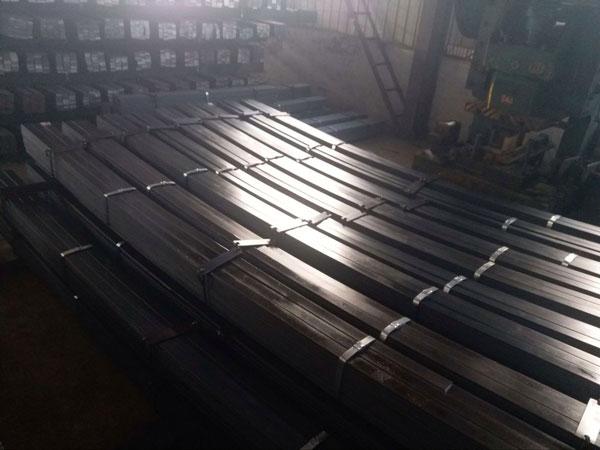
The 50CrVA, 50CrMnVA steel grades have a higher frame temperature than the Si and Si-Mn steel grades of 5200C, which offers higher heat tolerance, higher toughness, and less susceptibility to shear. They are used to tweak light trucks, springs, couplings and springs with other important uses and a working temperature of around 3,000C.
The 60Si2CrA and 60Si2Ni2A steels are penetrated in the respective sections of 50 and 80mm and are used for heavy and special heavy-duty springs and tweezers.
These are the best automotive tweezers. Hope the article has brought useful information to readers